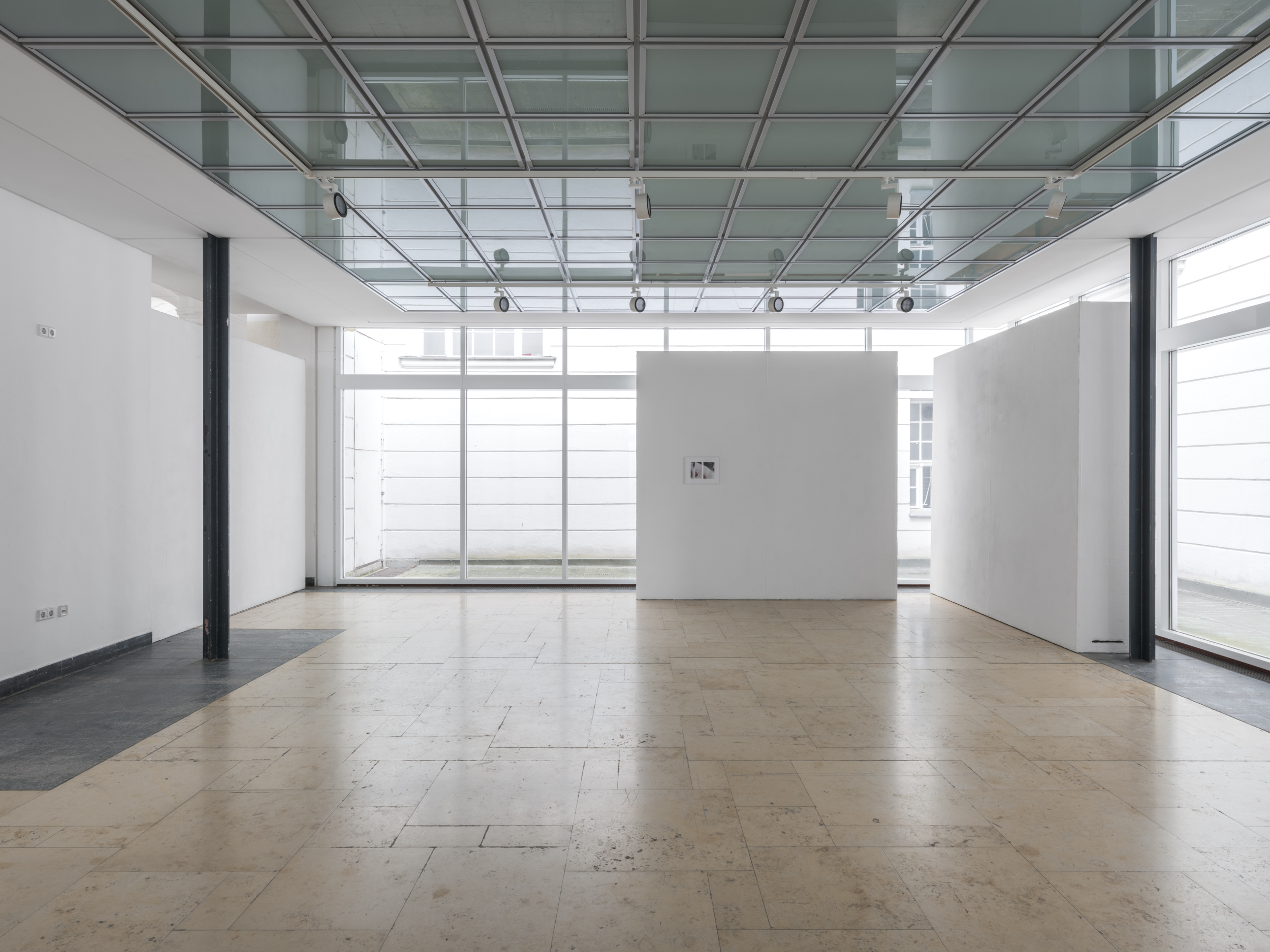
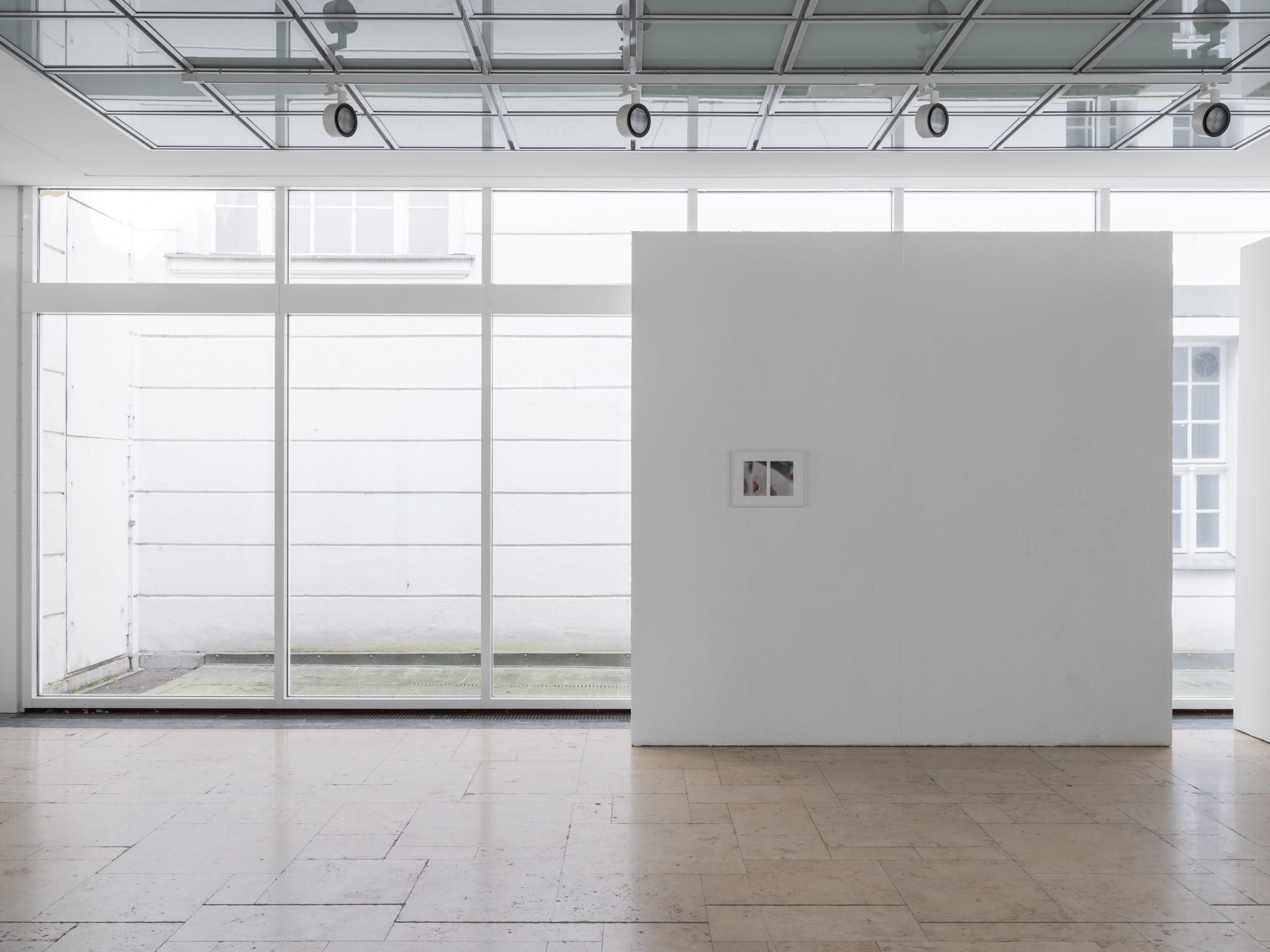
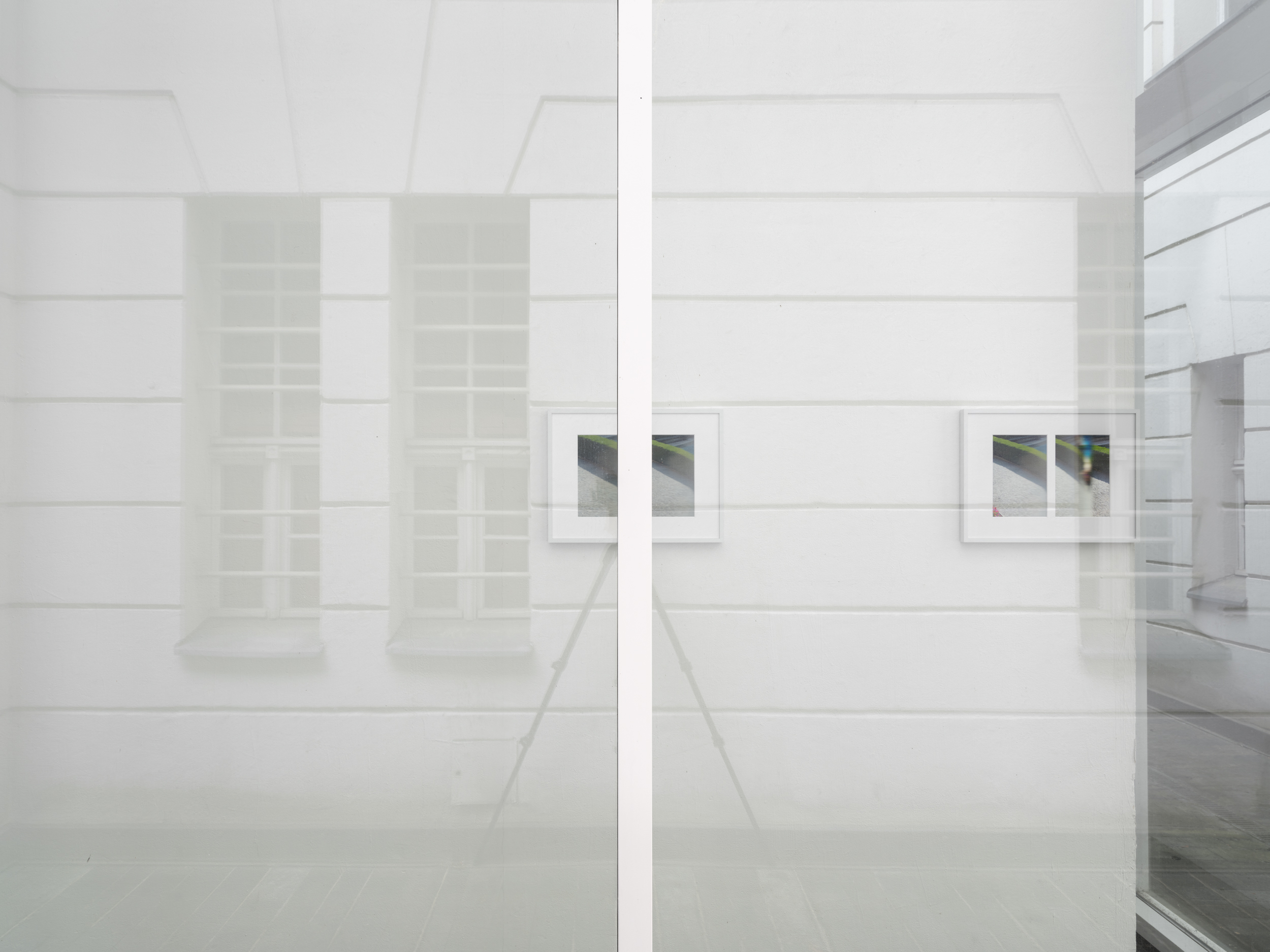
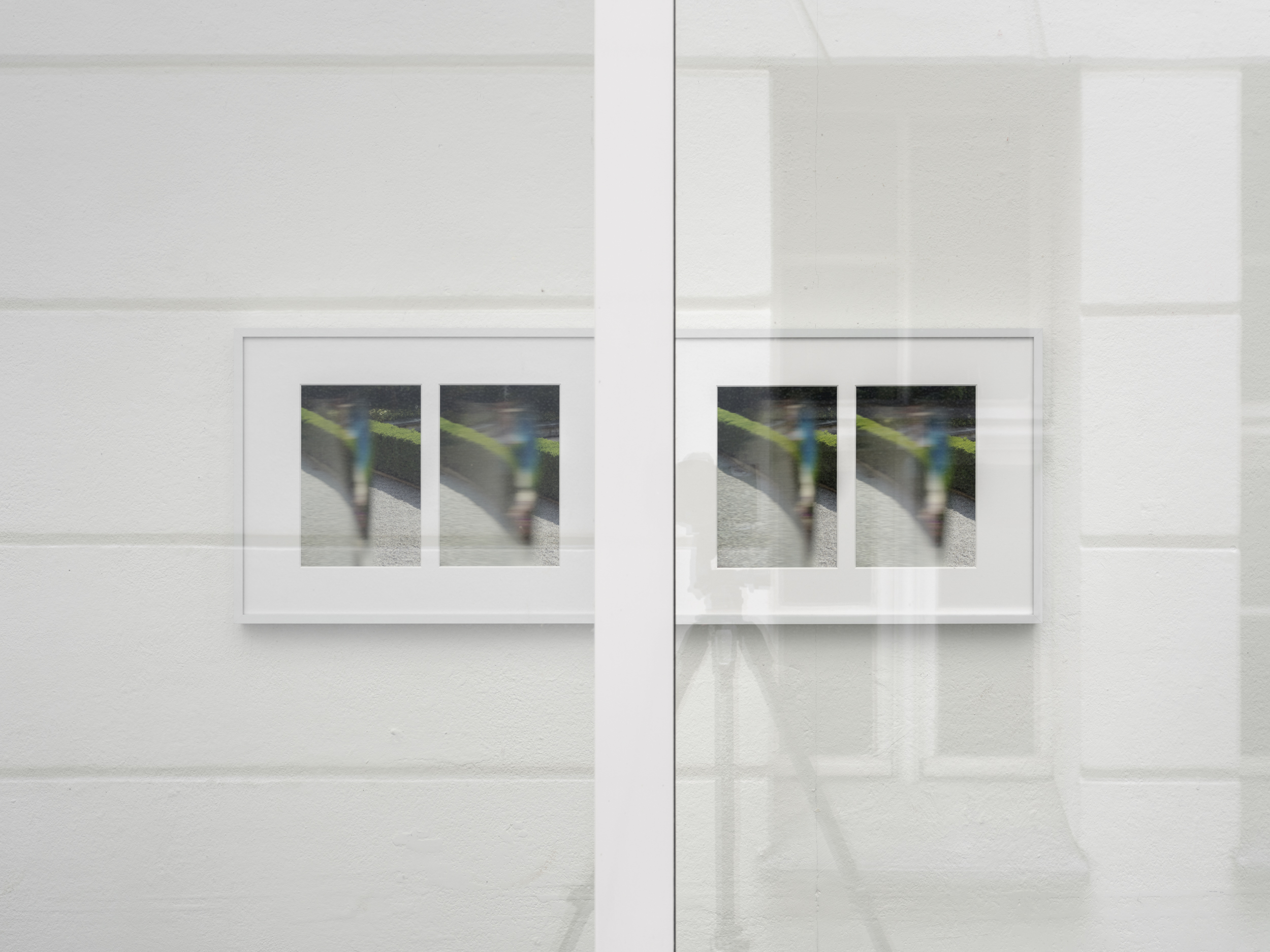
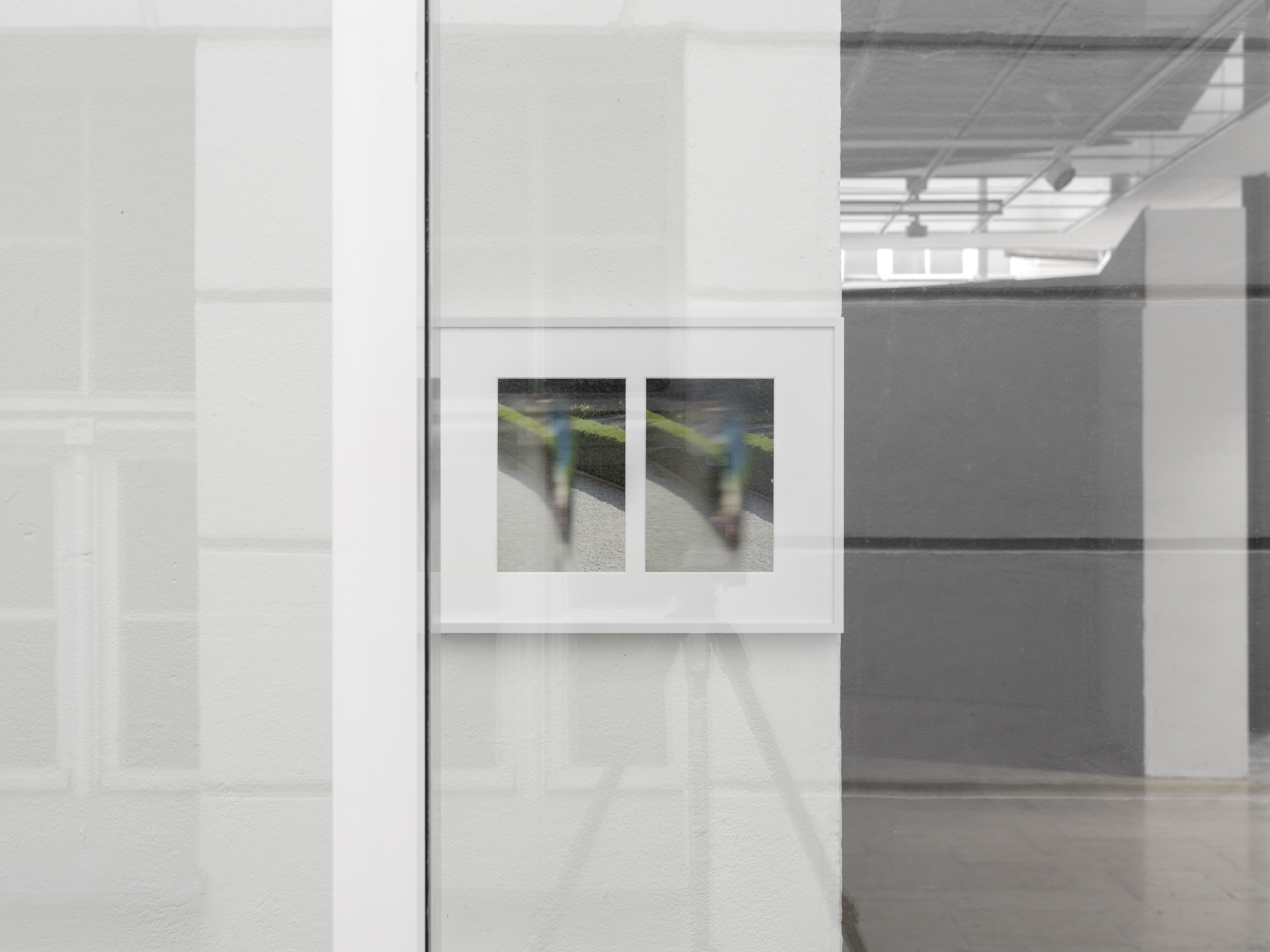
‘Rather, the architecture and interior design become the lens through which the scene is viewed: by repeatedly moving between the interior and exterior spaces whilst photographing through the curved glass pane at the villa’s main entrance, the artist created ten images consisting of elements that are partly recognisable and partly blurred into silhouettes, in which the garden and the movements of visitors are condensed. The order and structure of the garden—with its clearly defined paths, geometrically trimmed hedges and meticulously planted flowerbeds—is disrupted by the blurred areas in the image.’
‘Elements of distortion and seemingly aimless perspectives in the photographs draw attention to aspects of the villa’s history that remain hidden from the view of many visitors: during the Second World War, the Necchi Campiglio family left Milan. The villa was occupied by the Fascist regime and served as the residence and command centre of Alessandro Pavolini, one of Benito Mussolini’s closest confidants and a leading official of the ‘Ventennio’ (1922–1943). Mussolini himself lived in the prefecture not far from the villa and could easily reach the house via a back entrance that led straight through the garden.’
Exerpts from ‘The Phantom of Empty Time’ written by Alexandra Karg for a forthcoming publication by University of the Arts Berlin, 2026.
Exhibition of Nominees of the UdK Berlin Art Award, with Sarah Ama Duah, Amanda Ezquerra, Enno Haar, Tara Habibzadeh, Steve C. E. Knoll, Minu Park, Josephine Rothäuser, Miriam Umiń, Karl Alexander Schickhardt.
Photos: Julian Blum